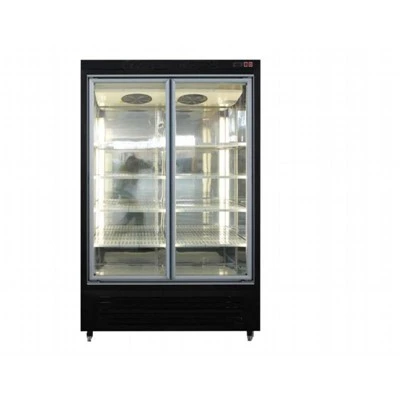
Supermarket Retroft Glass Door Hey everyone, I’m Jake, part of the team at Classic Glass Door — yeah, the name’s right up there, we’ve been supplying these classic-style glass doors for residential and commercial spaces for over a decade. Lately, I’ve been getting a ton of questions from contractors, homeowners, and even some eco-conscious design folks: “Wait, are your classic glass doors actually eco-friendly?” It’s not a dumb question, honestly — every building material’s got a carbon footprint these days, and glass can feel like it’s got a bad rap for being energy-heavy or wasteful. Let’s break this down without the stuffy industry jargon, okay? First, let’s get one thing straight: not all glass doors are created equal. Classic glass doors, the ones we supply, are usually made with solid glass (not that thin, wobbly stuff from the 90s) and framed with materials like solid wood, aluminum, or even fiberglass — and that’s where the eco-checks start. Let’s start with the big one: energy efficiency. A lot of people think glass = bad for heating/cooling, but modern classic glass doors use insulated glass units (IGUs) — you know, two panes of glass with a gap in between, often filled with argon gas. Wait, argon’s an inert gas that’s way better at trapping heat than air, right? So that gap plus low-e coatings (those micro-thin layers that reflect heat back inside in winter and block it out in summer) actually make these doors way more efficient than, say, a old wooden door with a single glass panel. I remember a customer last year who swapped his single-pane glass door for one of our classic insulated ones — he said his winter heating bill dropped like 12% immediately. Now, that’s not anecdotal; studies from the Department of Energy (DOE) actually back that up: IGUs with low-e coatings can reduce heat loss through glass by up to 50% compared to single-pane. But wait, what about the production of glass itself? I won’t lie, making glass is energy-intensive — you heat sand, soda ash, and limestone to like 2,700 degrees Fahrenheit in a furnace. But here’s the thing: our manufacturers use a ton of recycled glass (called “cullet”) in the mix. Most classic glass doors we supply are 30-40% cullet, sometimes even more. And using cullet cuts energy use for production by like 20-30% — because you don’t have to heat raw materials from scratch. Compare that to if a company was making 100% new glass, and that’s a big win. Also, classic glass doors are built to last. A lot of cheap glass doors on the market warp, crack, or fog up after 5-10 years. Our doors? We use solid frames, weather-stripping that holds up, and tempered glass (so it’s way less likely to shatter). I’ve had customers tell me their Classic Glass Door from 15 years ago is still working perfectly. Durability = less replacement, right? Because if you have to swap a door every 5 years, that’s way more waste than a door that lasts 30. That’s a key point people miss — eco-friendliness isn’t just about materials, it’s about how long something stays useful. Now, let’s talk about waste. When glass doors are retired, glass is 100% recyclable, infinitely. Unlike plastic, which degrades every time you recycle it, or wood that can only go through a few cycles before it’s too weak, glass can be melted down and made into new glass forever. Even the wood frames we use — most are FSC-certified, meaning the wood comes from responsibly managed forests where they replant trees. We also work with suppliers who take back old door frames if they’re still intact, to repurpose them instead of sending them to landfills. A lot of folks don’t know that — we have a small take-back program for local contractors, and it’s cut our waste from installations by like 18% last year. But wait, let’s address the other side: the downsides. No, classic glass doors aren’t perfect. If you don’t use insulated glass, they’re way less efficient. If you use a thin aluminum frame without thermal breaks (a barrier between the interior and exterior metal to stop heat transfer), that frame can conduct a lot of heat or cold. That’s why at Classic Glass Door, we only supply doors with thermal-broken frames — it’s a non-negotiable for us, because we don’t want to push a product that’s actually worse for energy use. Also, glass is transparent, which can mean more natural light, but that can lead to glare in summer if you don’t have the right treatment. But we offer options like frosted glass or interior blinds that fit right into the IGU gap, so you can adjust how much light comes in without adding extra window treatments that end up in landfills. Another thing: a lot of people compare glass doors to solid doors, but let’s be real — solid doors don’t let natural light in. If you’re building a home that relies on artificial lighting during the day, that’s extra electricity (most of which still comes from fossil fuels, depending on where you live). Our classic glass doors can reduce the need for artificial light in entryways, patios, or home offices by up to 30% — that’s another energy win. Wait, let’s talk about transportation too. We’re based in the Midwest, so we supply mostly local to nearby states, not cross-country. That cuts down on fuel emissions from shipping, which is a big part of a product’s carbon footprint. A lot of big national brands ship their doors across the country, so their transport emissions are way higher than ours. And our packaging is mostly recycled cardboard, no styrofoam — we use biodegradable peanuts now, too. I know that sounds small, but every bit adds up. Let’s also clear up a myth: glass fog. Old single-pane doors fog because moisture gets between the panes and can’t escape. Our IGUs have a seal that’s tested to last 20+ years, so fog won’t happen. That means you don’t have to replace the door because of a seal failure, which is another way we reduce waste. I’ve had a few customers ask if classic glass doors are better than sliding doors for eco-friendliness. From what our team has seen, the fixed-panel classic glass doors (like French doors) actually have less air leakage than most sliding doors, because the seals on hinged doors are tighter. Air leakage is a huge energy waster — the DOE says it’s responsible for like 10-20% of a home’s energy loss. So that’s another plus for classic hinged glass doors. Now, let’s not pretend there’s no work to do. We’re still working on getting all our glass 100% recycled — right now we’re at 45%, and our goal is 60% by 2025. We’re also testing solar-control glass that can generate a tiny bit of electricity, though that’s still in the early stages. And we’re partnering with more local wood suppliers to cut down on transport even more. A lot of people think “eco-friendly” has to be a fancy, high-tech product, but classic doors are about timeless design paired with modern sustainability tweaks. It’s not about being the newest gadget — it’s about building a door that works for decades, uses recycled materials, and helps lower your energy bill along the way. If you’re a contractor working on a green build, or a homeowner looking to swap your old door for something that’s not just stylish but actually kinder to the planet, we’d love to chat. We can talk through your space, show you our insulated glass options, and even go over the take-back program for old doors. Just reach out to our team to connect and discuss your project needs. References: U.S. Department of Energy, Office of Energy Efficiency & Renewable Energy. (2022). Energy Efficiency of Window and Door Insulation. Forest Stewardship Council (FSC). (2023). Annual Report on Responsible Wood Sourcing. Glass Packaging Institute. (2021). Life Cycle Assessment of Recycled Glass Production. Classic Glass Door
Coste Glass Door Co., Ltd.
As one of the most professional classic glass door manufacturers and suppliers in China, we’re featured by quality products and good price. Please feel free to wholesale bulk classic glass door in stock here and get quotation from our factory. Customized orders are welcome.
Address: 41/47, VILLAGE NO.5 KHOK KRABUE SUBDISTRICT MUEANG SAMUT SAKHON DISTRICT ,SAMUT SAKHON PROVINCE 74000 ,Thailand
E-mail: Alicezhou@shhag.com
WebSite: https://www.costeglassdoor.com/
