Hey there! I’m a supplier of liquid cooling pipes, and I know how crucial it is to keep those pipes leak – free. A leak in a liquid cooling pipe can spell disaster, whether it’s in a small PC setup or a large – scale industrial cooling system. So, let’s dive into how you can detect leaks in a liquid cooling pipe. Liquid Cooling Pipe
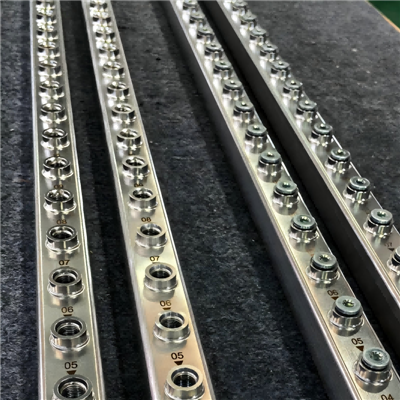
Visual Inspection
The first and simplest method is a visual inspection. It’s so straightforward, yet it can catch a lot of issues. Start by carefully looking over the entire length of the pipe. Check for any visible signs of moisture or water droplets. Sometimes, a small drip can turn into a big problem if left unchecked.
Look at the joints and connections. These are common areas where leaks can occur. The seals at the joints might wear out over time, causing the liquid to seep out. Check for any discoloration on the pipe or around the joints. A rusty or discolored spot could indicate a leak, especially if the liquid in the pipe has some corrosive properties.
Also, look for any signs of damage to the pipe itself. Cracks, scratches, or dents can weaken the pipe and lead to leaks. Even a small crack can allow liquid to escape, and if it’s in a hard – to – reach area, it might not be immediately obvious. So, take your time and look at every inch of the pipe, especially in areas where it bends or where it’s exposed to vibration.
Pressure Testing
If a visual inspection doesn’t reveal anything, it’s time to move on to pressure testing. Pressure testing is a much more accurate way to detect leaks, especially those that might be too small to see.
First, you’ll need to isolate the liquid cooling pipe. Close off the valves at both ends of the pipe to make sure the pressure is contained within the section you’re testing. Then, use a pressure gauge to measure the pressure inside the pipe.
Slowly increase the pressure to a safe level. You don’t want to over – pressure the pipe and cause more damage. Most liquid cooling pipes are designed to handle a certain amount of pressure, so refer to the manufacturer’s specifications.
Once the desired pressure is reached, hold it for a period of time, usually around 10 – 15 minutes. Keep an eye on the pressure gauge. If the pressure drops during this time, it’s a clear sign that there’s a leak in the pipe.
To locate the leak, you can use a soapy water solution. Spray or brush the soapy water along the length of the pipe and at the joints. If there’s a leak, the pressure will force the air or liquid out, creating bubbles in the soapy water. This method is great for pinpointing the exact location of the leak.
Thermal Imaging
Thermal imaging is another high – tech way to detect leaks in liquid cooling pipes. It works based on the principle that a leaking liquid will have a different temperature than the surrounding area.
You’ll need a thermal imaging camera for this method. Walk along the length of the pipe, pointing the camera at it. The camera will detect the temperature variations and display them as a heat map on the screen.
A leak will often show up as a cooler or warmer spot, depending on the temperature of the liquid and the environment. For example, if the liquid in the pipe is cooler than the surrounding air, a leak will appear as a cold spot on the thermal image.
Thermal imaging is especially useful for detecting leaks in pipes that are hidden behind walls or insulation. It can quickly scan a large area and identify potential leak points without the need for any physical contact with the pipe.
Ultrasonic Testing
Ultrasonic testing is a bit more advanced, but it’s very effective for detecting small leaks. When a liquid leaks from a pipe, it creates a high – frequency sound wave. An ultrasonic leak detector can pick up these sound waves and alert you to the presence of a leak.
To use an ultrasonic leak detector, turn it on and set it to the appropriate frequency range. Then, move the detector along the pipe, listening for any changes in the sound. When you get close to a leak, the detector will emit a louder or different – pitched sound.
This method is great for detecting leaks in pipes that are under pressure, as the pressure will cause a more distinct sound wave. It can also be used to detect leaks in pipes that are made of different materials, such as metal or plastic.
Monitoring Fluid Levels
One of the simplest ways to tell if there’s a leak in a liquid cooling pipe is to monitor the fluid levels. Keep a regular check on the reservoir or tank that supplies the liquid to the cooling system.
If you notice that the fluid level is dropping faster than normal, it’s a strong indication that there’s a leak somewhere in the system. You can also measure the amount of fluid that’s being added to the system over a period of time. If you’re constantly having to add more fluid to keep the system running, there’s likely a leak.
However, it’s important to note that other factors can also cause a drop in fluid levels, such as evaporation or normal system consumption. So, if you suspect a leak based on fluid level changes, it’s a good idea to use one of the other detection methods to confirm.
Why Leak Detection Matters
As a liquid cooling pipe supplier, I can’t stress enough how important it is to detect leaks early. A small leak can lead to a significant loss of coolant, which can reduce the efficiency of the cooling system. In a PC, this could result in overheating and potential damage to the components. In an industrial setting, it could cause production downtime and costly repairs.
Leaking coolant can also be a safety hazard, especially if it contains chemicals or is electrically conductive. It could cause corrosion to the surrounding equipment or even pose a risk of electrical shock.
Wrapping Up

Detecting leaks in a liquid cooling pipe is a crucial part of maintaining a reliable cooling system. By using a combination of visual inspection, pressure testing, thermal imaging, ultrasonic testing, and fluid level monitoring, you can catch leaks early and prevent major problems.
Smooth Condenser Tube If you’re in the market for high – quality liquid cooling pipes or need more advice on leak detection, don’t hesitate to reach out. Let’s work together to keep your cooling systems in top shape and avoid those pesky leaks.
References
- "Liquid Cooling Systems Handbook" – Author unknown
- "Thermal Imaging for Leak Detection" – Research paper from a local tech institute
- "Ultrasonic Testing in Pipe Maintenance" – Industry publication
China Super Tech Co., Ltd.
As one of the most professional liquid cooling pipe manufacturers and suppliers in China, we’re featured by quality products and good service. Please rest assured to wholesale OEM liquid cooling pipe from our factory. Also, custom service is available.
Address: Wangjing Science and Technology Park, Guangshun North Street, Chaoyang District, Beijing
E-mail: sales@316liquidcooling.com
WebSite: https://www.316liquidcooling.com/
