Yo, what’s up? I’m a supplier in the malleable iron pipe fittings game, and I’ve seen it all. Today, I’m gonna share with you the common defects you might run into when dealing with these bad boys. Malleable Iron Pipe Fittings

Surface Defects
Let’s start with the surface. One of the most common issues is sand holes. You know, those little pits on the surface of the pipe fittings. They’re usually caused by sand particles getting stuck in the mold during the casting process. If the sand isn’t properly cleaned or if there are gaps in the mold, sand can get trapped and create these holes. And trust me, they’re not just an aesthetic problem. Sand holes can weaken the structure of the fitting and make it more prone to leaks over time.
Another surface defect is porosity. This looks like tiny holes all over the surface or inside the fitting. It happens when gas gets trapped in the molten metal as it solidifies. There could be a few reasons for this. Maybe the metal wasn’t degassed properly before casting, or the pouring speed was too fast. Porosity can reduce the corrosion resistance of the fitting and also affect its overall strength.
Then there’s scaling. You’ll notice a layer of oxide forming on the surface of the fittings. This is usually because of improper heat treatment or exposure to high temperatures during the manufacturing process. Scaling can make the fitting look rough and also make it difficult to apply coatings, which are important for protecting the fitting from corrosion.
Dimensional Defects
Now, let’s talk about dimensions. One big issue is out – of – tolerance dimensions. Imagine you order a pipe fitting with specific size requirements, but when it arrives, it’s either too big or too small. This can be a real headache when it comes to installation. Out – of – tolerance dimensions can be caused by inaccurate molds, problems with the machining process, or even changes in the metal’s properties during cooling.
Wall thickness variation is another concern. In a proper pipe fitting, the wall thickness should be uniform all around. But sometimes, you’ll find that the wall is thicker in some areas and thinner in others. This can lead to uneven stress distribution in the fitting. When there’s pressure in the pipeline, the thinner areas might give way first, causing leaks or even complete failure. This kind of variation can occur due to uneven metal flow during casting or problems with the die design.
Cracking and Fracturing
Cracks are a serious defect. There are different types of cracks. Thermal cracks can form during the cooling process. When the fitting cools too quickly, there’s a big difference in temperature between the surface and the inside. This creates stress, and if the stress is too high, it can cause cracks to form. These cracks can start small but can grow over time, especially if the fitting is under pressure.
Mechanical cracks can happen if the fitting is mishandled during transportation or installation. Dropping a fitting or using too much force during installation can cause cracks. And once a crack forms, it can compromise the integrity of the whole pipeline system. Even a small crack can lead to significant leaks, which can be costly to fix.
Internal Defects
In addition to the surface and dimensional issues, there are also some internal defects to watch out for. Inclusions are non – metallic materials that get mixed in with the iron during the melting process. These can be pieces of slag, dirt, or other impurities. Inclusions can weaken the structure of the fitting, making it more likely to fail under stress.
Segregation is another internal problem. This occurs when the chemical composition of the iron is not uniform throughout the fitting. Some areas might have a higher concentration of certain elements than others. Segregation can affect the mechanical properties of the fitting, such as its hardness and ductility. Different parts of the fitting might behave differently under stress, which can lead to premature failure.
How We Deal with These Defects
As a supplier, I take these defects seriously. We’ve got a strict quality control system in place. First of all, we make sure our molds are in top – notch condition. We regularly inspect and maintain them to prevent sand holes and dimensional inaccuracies. Before casting, we degas the molten metal thoroughly to reduce porosity.
During the manufacturing process, we monitor the temperature and pouring speed carefully. This helps us avoid thermal cracks and other heat – related issues. After the fittings are made, we conduct a series of tests. We use non – destructive testing methods like ultrasonic testing to detect internal defects such as inclusions and cracks. And we measure the dimensions of each fitting to ensure they meet the required tolerances.
If we find any defective fittings, we don’t just let them go. We either rework them if possible or scrap them. We believe in providing our customers with high – quality products, and we know that even one defective fitting can cause big problems for our clients.
Why You Should Choose Us
So, if you’re in the market for malleable iron pipe fittings, you might be wondering why you should choose us. Well, we’ve got years of experience in this industry. We know all the ins and outs of making these fittings, and we’ve learned how to avoid those common defects.
Our quality control system is second to none. We’re constantly improving our processes to make sure our products are of the highest quality. And we offer competitive prices. We understand that you’re looking for a good deal, but you also want reliable products. With us, you get both.
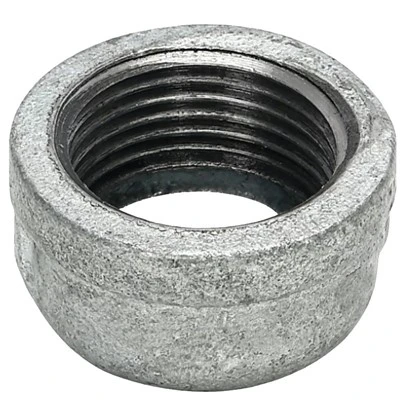
If you’re interested in our malleable iron pipe fittings, we’d love to have a chat with you. Whether you’ve got a big project or a small one, we can provide you with the right fittings for your needs. So, don’t hesitate to reach out and start a conversation about your requirements. We’re here to help you find the best solutions for your pipeline systems.
References
- Metal Casting Handbook: A Practical Guide to Metalcasting Technology
- Engineering Manual on Pipe Fittings and Valves
Seamless Steel Pipe So, what are you waiting for? Let’s talk business and get you the best malleable iron pipe fittings out there!
Shenzhen Gangyuanlong Building Materials Co., Ltd.
As one of the most professional malleable iron pipe fittings manufacturers and suppliers in China, we also support customized service with low price. Please feel free to wholesale premium malleable iron pipe fittings in stock here from our factory. Also, quotation is available.
Address: No. 10-1, Jinlong 4th Road, Baolong Community, Longgang Subdistrict, Longgang District, Shenzhen
E-mail: szgylco@gmail.com
WebSite: https://www.szgylco.com/
