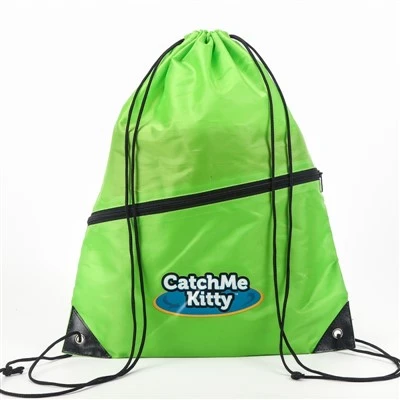
As a supplier of Pp Woven Laminated Bags, I’m often asked about the manufacturing process behind these versatile and widely used products. In this blog post, I’ll take you through each stage of how Pp Woven Laminated Bags are made, from the raw materials to the finished product. Pp Woven Laminated Bag
1. Raw Materials
The first step in making Pp Woven Laminated Bags starts with the raw materials. The primary material is polypropylene (PP), a thermoplastic polymer known for its high strength, durability, and resistance to moisture. Polypropylene is derived from petroleum and natural gas through a process called polymerization.
We source high – quality polypropylene resin pellets. These pellets can come in different grades, and the selection depends on the specific requirements of the bags, such as strength, flexibility, and color. For example, if we are making bags for heavy – duty applications, we’ll choose a higher – grade polypropylene resin that offers greater tensile strength.
In addition to polypropylene, we also use additives like UV stabilizers. These stabilizers help protect the bags from the harmful effects of sunlight, preventing them from becoming brittle and deteriorating over time. We may also add color masterbatches if colored bags are required. The color masterbatches are concentrated mixtures of pigments and carriers that are blended with the polypropylene resin to achieve the desired color.
2. Extrusion
The process of extrusion is crucial in transforming the polypropylene resin into the threads that will form the basis of the woven fabric. The polypropylene resin pellets are first fed into an extruder, which is a large, heated machine.
Inside the extruder, the pellets are melted under high temperatures, usually around 200 – 250 degrees Celsius. As the resin melts, it forms a viscous liquid. The extruder has a screw mechanism that pushes the molten polypropylene through a die with small holes. As the molten plastic passes through these holes, it forms long, thin strands or filaments.
These filaments are then cooled rapidly by passing them through a water bath. The rapid cooling solidifies the filaments, making them strong and flexible. After cooling, the filaments are stretched to orient the polymer molecules in the filaments, which further enhances their strength. The stretched filaments are then wound onto spools for further processing.
3. Weaving
Once we have the spools of polypropylene filaments, the next step is weaving. The weaving process is similar to that used in traditional textile weaving. We use a special type of loom designed for weaving polypropylene filaments.
The filaments are unwound from the spools and arranged in a parallel pattern to form the warp threads. Another set of filaments, known as the weft threads, are then woven through the warp threads at a right – angle. The weaving pattern can vary depending on the desired strength and appearance of the fabric. Common patterns include plain weave, twill weave, and leno weave.
Plain weave is the simplest and most commonly used pattern. It provides a balanced and uniform appearance. Twill weave, on the other hand, creates a diagonal pattern on the fabric and is often used when more strength is required. Leno weave is used to create a more open and flexible fabric.
During the weaving process, the tension of the filaments is carefully controlled to ensure a consistent and high – quality fabric. The width and length of the woven fabric can also be adjusted according to the specifications of the bags.
4. Lamination
After the woven fabric is produced, it undergoes the lamination process. Lamination is the process of attaching a layer of film to the woven fabric to enhance its properties.
The most commonly used film for lamination is polyethylene (PE) film. The PE film can be either in the form of a blown film or a cast film. Blown film is produced by extruding the polyethylene resin through an annular die and blowing air into the center to form a bubble. Cast film is made by extruding the resin onto a chilled roll.
The lamination process can be done using different methods. One common method is extrusion lamination. In this method, a layer of molten polyethylene is extruded between the woven fabric and a second layer of film or substrate. The pressure and heat from the extrusion process bond the three layers together.
Another method is adhesive lamination. In this case, an adhesive is applied to either the woven fabric or the film, and then the two are pressed together under pressure. The adhesive can be a solvent – based or a water – based adhesive, depending on the application and environmental requirements.
Lamination provides several benefits to the Pp Woven Laminated Bags. It improves the bag’s resistance to moisture, making it suitable for storing and transporting goods in humid conditions. It also enhances the bag’s printability, as the smooth surface of the laminated film allows for better ink adhesion.
5. Printing
Printing is an important step, especially if the bags are used for marketing or brand promotion. We can use a variety of printing methods on Pp Woven Laminated Bags.
Flexographic printing is one of the most commonly used methods. It involves using a flexible printing plate with raised images. Ink is applied to the plate, and then the plate transfers the ink onto the bag’s surface. Flexographic printing is suitable for large – scale production and can produce high – quality prints with a wide range of colors.
Screen printing is another option. In screen printing, a stencil is used to apply ink to the bag. The ink is forced through the stencil onto the bag’s surface using a squeegee. Screen printing is ideal for printing simple designs or logos with a limited number of colors.
Digital printing is becoming increasingly popular due to its flexibility and ability to print high – resolution images. It uses digital files to print directly onto the bag’s surface without the need for printing plates. Digital printing is suitable for small – batch production and customized designs.
6. Bag Making
The final stage of the manufacturing process is bag making. The laminated and printed fabric is cut into the appropriate size and shape for the bags.
The cutting process can be done using a variety of cutting tools, such as guillotine cutters or laser cutters. Guillotine cutters are commonly used for straight – line cuts, while laser cutters are more suitable for intricate shapes and designs.
After cutting, the edges of the fabric are often sealed to prevent fraying. This can be done by heat sealing or using adhesive tapes. Then, the bag is formed by folding and stitching the fabric. The stitching can be done using a sewing machine, and the type of stitching can vary depending on the bag’s strength requirements. For example, double stitching is often used for heavy – duty bags to ensure maximum durability.
Finally, any additional features such as handles, zippers, or closures are added to the bag. Handles can be made from the same polypropylene fabric or from other materials like rope or webbing.
Quality Control
Throughout the entire manufacturing process, we implement strict quality control measures. At each stage, from raw material inspection to the final product, we check for defects, such as uneven weaving, poor lamination, or incorrect printing.
We use various testing methods to ensure the quality of our Pp Woven Laminated Bags. Tensile strength testing is used to measure the bag’s ability to withstand pulling forces. Burst strength testing checks the bag’s resistance to internal pressure. We also test for color fastness, moisture resistance, and print adhesion.
Conclusion
Pp Woven Laminated Bags are made through a complex and multi – step manufacturing process. From the careful selection of raw materials to the final bag – making stage, each step is crucial in ensuring the quality, durability, and functionality of the bags.
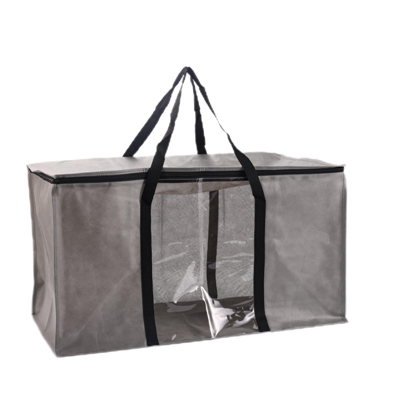
As a supplier, we are committed to providing high – quality Pp Woven Laminated Bags that meet the diverse needs of our customers. Whether you need bags for agricultural products, construction materials, or consumer goods, we can offer customized solutions to suit your requirements.
Moving Bags If you are interested in purchasing Pp Woven Laminated Bags or would like to discuss your specific needs in more detail, please feel free to contact us. We look forward to the opportunity to work with you and provide you with the best – quality bags at competitive prices.
References
- "Plastics Technology Handbook" by Myers, Charles L.
- "Textile Weaving: Principles and Applications" by Postle, Ronald.
Jiade (Wenzhou) Daily Necessities Co., Ltd.
As one of the most professional pp woven laminated bag manufacturers and suppliers in China, we’re featured by quality products and good price. Please rest assured to buy bulk discount pp woven laminated bag from our factory. We also accept customized orders.
Address: Building2,NO.1299,keji Road, Longgang City,Wenzhou City,Zhejiang Province,China.
E-mail: lhf@lianhaibag.com
WebSite: https://www.jiadebag.com/
