Hey there! If you’ve ever walked through a manufacturing floor—whether it’s a car factory stamping body panels, a food plant packaging cereal, or a machine shop cutting metal parts—you’ve probably seen axial piston pumps at work, even if you didn’t realize it. I’ve been an axial piston pump supplier for over a decade now, and let me tell you, these pumps aren’t just “another part” on the assembly line—they’re the workhorses that keep half the heavy lifting, cutting, and moving running smoothly. Today, I want to break down exactly what makes axial piston pumps the go-to for manufacturing, what they’re used for across different production areas, and why I always recommend them to plant managers who’re tired of dealing with leaky, inconsistent pump performance. Axial Piston Pump
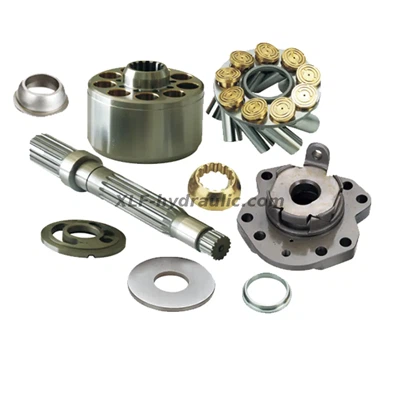
First, let’s keep it real—most folks I talk to in manufacturing don’t care about the tiny engineering jargon. You care about something that doesn’t break down mid-shift, uses power efficiently, and can handle the tough conditions of a factory floor. Axial piston pumps check all those boxes, and here’s why they’re different from other pump types (like gear pumps or vane pumps, for anyone who’s worked with those before). Their design—those pistons lined up in a cylinder block that spins against a angled swash plate—means they can handle super high pressures (we’re talking 1,000+ psi, sometimes way higher) without sacrificing accuracy. Unlike gear pumps, which can get bumpy at high pressure, or vane pumps that wear out fast when they’re pushed hard, axial piston pumps deliver consistent, smooth flow even under load. That consistency is non-negotiable in manufacturing—one wrong move from a pump and you might scrap an entire batch of parts or shut down a production line for hours.
Let’s jump into the actual applications, because that’s what you’re here for. First up: metal stamping and forging. If you’ve ever watched a car factory’s stamping press slam a 200-pound steel panel into a door shape in half a second, that power comes from an axial piston pump. Stamping presses need massive, controlled pressure to bend metal without cracking it, and these pumps can deliver that pressure on demand—no lag. I remember a client a few years back who was using a generic gear pump for their stamping line; it would struggle to hit the 1,500 psi they needed, so they had to slow down their press, which cut their output by 20%. Switched to our axial piston pumps, and they were back to full speed within a week, plus they noticed a 10% drop in energy costs because the pump only uses power when the press is actually stamping, not running idle. For forging, too—when you’re heating metal to near-melting and pounding it into a gear or axle, you need hydraulic power that’s responsive and stable. Axial piston pumps don’t shudder when the press hits the metal, so the forged parts are more consistent, which means less quality control rework.
Next on the list: machine tools, like CNC mills and lathes. If you’ve ever used a CNC machine, you know precision is everything. If the hydraulic system that moves the tool head or clamps the workpiece is off by even a millimeter, you’ve got a defective part. Axial piston pumps are perfect here because of their variable flow rate—they can adjust how much fluid they push in real time, based on what the machine needs. For example, when a CNC mill is just moving the tool to the start of a cut, it doesn’t need much pressure, so the pump slows down. When it’s actually cutting through steel or aluminum, it cranks up the pressure to keep the cut clean and accurate. A lot of modern CNC machines come set up for axial piston pumps for that exact reason, but I’ve had old-school machine shops reach out because their old pumps would drift during long cuts—their axial pumps don’t do that. We also work with shops that make medical parts, like surgical instruments, and they rely on these pumps because the consistent flow means every tool they make meets strict FDA tolerances. No errors, no scrap, no headaches.
Then there’s plastic injection molding, which is a huge manufacturing segment. You inject molten plastic into a mold at super high pressure, and you need that pressure to stay exactly the same until the plastic cools. If the pressure drops even a little, you get short shots—parts that don’t fill out the mold, which are useless. Axial piston pumps are ideal here because their volumetric efficiency is through the roof—like 95% or higher, which means almost none of the hydraulic fluid is wasted. I had a plastics client who was using a vane pump for their disposable syringes (weird, I know, but they use a lot of plastic parts) and they were getting 5-10% of parts with short shots. Switched to our axial piston pumps, and that defect rate dropped to less than 1%. That’s a massive saving when you’re making hundreds of thousands of parts a month. Also, injection molding machines run 24/7 a lot of the time, so the pumps need to be durable. Axial piston pumps have fewer moving parts that wear out fast compared to other types, so we’ve got clients who’ve run the same pump for 8+ years with only minor maintenance.
Wait, let’s not forget material handling systems—conveyors, lift tables, robotic arms. A lot of people don’t realize that a lot of industrial robots use hydraulic power (rather than electric) for their arms, and axial piston pumps are the power source there. Robots need to move heavy parts (like a car engine block) smoothly, without jerking, to avoid damaging the part or the robot itself. The smooth flow from axial piston pumps eliminates that jerkiness, so you can move parts faster and safer. Conveyors that handle heavy loads, like pallets of steel, use hydraulic pumps to lift the conveyor ramps or adjust the height, and again, the consistent pressure means no sudden drops or stalls. I worked with a distribution center a few years back that was having issues with their lift tables stalling when they had a full pallet of parts—switched to axial piston pumps, and they haven’t had a stall in two years. That’s a big deal because downtime on material handling lines costs way more than the pump itself.
Now, why should you care as a manufacturing owner or maintenance manager? Let’s be real, upfront costs matter, but so do long-term costs. Axial piston pumps might cost a bit more than generic pumps, but the energy savings, less downtime, fewer defective parts, and longer lifespan add up fast. We’ve had clients recoup the extra cost in 6-12 months, which is a no-brainer. Also, they’re adaptable—we can customize them for different pressures, flow rates, and even environment conditions. If you’re working in a dirty factory with a lot of dust, we can seal the pumps to keep contaminants out, which prevents premature wear. If you’re working in a cold environment (like a factory in the Midwest that gets below freezing), we can adjust the fluid compatibility so the pump works without lag.
Wait, let’s address a common concern I hear: “Are axial piston pumps hard to maintain?” No, not really. They have a few wearing parts (like the pistons and swash plate), but those are easy to replace, and since they wear slower than other pumps, you don’t have to do maintenance as often. We also provide maintenance guides and support for all our pumps, so even if you don’t have a hydraulic specialist on staff, you can handle basic checks. And when something does go wrong (rare, but it happens), we offer quick turnaround on parts because we stock most common sizes.
I know a lot of suppliers will just hype up their product, but I’ll be honest—axial piston pumps aren’t the right fit for every job. If you need a super cheap pump for a low-pressure, intermittent application, a gear pump might work. But for anything that requires high pressure, precision, consistent flow, or 24/7 operation? Axial piston pumps are the way to go. I’ve seen too many manufacturing operations get held back by cheap pumps that break, cause scrap, or waste energy, and that’s why I focus on matching the right pump to the job, not just selling the most expensive one.
At the end of the day, manufacturing is all about getting parts out on time, keeping costs down, and making sure every product is consistent. Axial piston pumps are a small part of that, but they make a huge difference. If you’re dealing with pump-related issues—downtime, defective parts, high energy bills, or just pumps that can’t keep up with your production demands—I’d love to chat. We can go over your specific operation, what kind of pressure and flow you need, and find a pump that fits exactly what you’re looking for, no sales pitch, no fluff. Just real advice for real manufacturing problems.
If you’re ready to stop dealing with pump headaches and upgrade your hydraulic system, reach out to us. We’re here to help you keep your line running smooth, no matter what you’re making.
Kawasaki Series References:
- Manring, N. D. (2005). Hydraulic Control Systems. John Wiley & Sons.
- Ilhan, M., & Eriten, M. (2018). Performance analysis of axial piston pumps for industrial hydraulic applications. Proceedings of the Institution of Mechanical Engineers, Part E: Journal of Process Mechanical Engineering, 232(4), 567-578.
- Manufacturing Engineering Association. (2021). Hydraulic System Optimization for Modern Production Lines. MEA Press.
- Totten, G. E., & Westbrook, S. R. (2019). Hydraulic Fluids and Systems for Industrial Applications. CRC Press.
Wuhan Xinlaifu Hydraulic Equipment Co., Ltd.
Wuhan Xinlaifu Hydraulic Equipment Co., Ltd. is one of the most professional axial piston pump manufacturers and suppliers in China, featured by high quality OEM&ODM products. Please feel free to buy customized axial piston pump from our factory.
Address: Liansu Industrial Park, No.1, Xincheng 11th Road, Dongxihu District, Wuhan, Hubei, China
E-mail: service@xlf-hydraulic.com
WebSite: https://www.xlf-hydraulic.com/
