If you’ve ever worked with plastic manufacturing, you’ve probably walked past a mold and noticed the complex web of tiny channels running through its core and cavity blocks. Most folks new to specialized mold design might write those channels off as unnecessary, but anyone who’s spent years building special structure molds—molds for parts that don’t fit standard boxy shapes, like custom automotive interior brackets, medical device housings with intricate internal undercuts, or aerospace components with precision micro-features—knows those channels make or break a production run. That’s the runner system, and for us as a special structure mold supplier, it’s not just a part of the mold; it’s the backbone that turns a raw plastic pellet into a high-quality, functional finished part. Today, I want to break down exactly what that runner system does, why it’s non-negotiable for the specialized parts we serve, and why cutting corners on its design is the fastest way to scrap parts and missed deadlines. Special Structure Mold
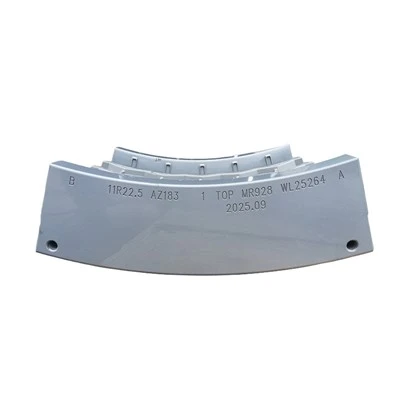
Let’s start with the basics, but only as a foundation for the unique challenges of special structure molds. A standard injection mold’s runner system is straightforward: it delivers molten plastic from the molding machine’s nozzle to the cavity, with minimal fuss. But when you’re dealing with a part that has, say, a curved internal lumen for a surgical tool, or a set of interlocking tabs that have to align perfectly every single cycle, that simple system won’t cut it. Our special structure molds are built for parts with geometric complexity that standard molds can’t handle—undercuts that require side actions, micro-features smaller than a grain of sand, or multi-layer components that need precise plastic flow without mixing layers. The runner system’s first core function is to control that flow, and not just any flow: uniform, controlled flow that matches the exact needs of the part’s unique shape.
Think of molten plastic in an injection mold like honey out of a jar. If you tilt the jar too fast, it gushes, creates bubbles, or doesn’t flow evenly across the surface. For a standard housing part, that gush might lead to a small sink mark you can sand off, but for a special structure part—say, a dental implant abutment that has to fit with micro-millimeter precision—even a tiny uneven flow can lead to warping, gaps in the surface, or parts that don’t meet ISO 13485 standards for medical devices. Our engineering teams design runners to match the viscosity of the specific plastic resin we’re using, too. A polycarbonate for automotive headlight lenses flows differently than a medical-grade PEEK for spinal implants, so the runner’s diameter, length, and even its taper are calibrated to keep the plastic moving at a steady, consistent rate all the way to the cavity. No hot spots, no cold spots, no sudden surges that mess up the part’s delicate shape.
Next up: pressure management, which is where the runner system really differentiates a standard mold from a special structure one. Most special structure parts require tight tolerances—often ±0.001 inches or less. To hit those tolerances, you need consistent pressure throughout the mold, and that pressure starts at the runner system. If a runner is too long, plastic has to travel farther, losing pressure along the way before it reaches the farthest point of the cavity. For a part with multiple cavities (common in high-volume special structure production, like custom electronic connector housings), unequal pressure in individual runners means some cavities get overfilled and others underfilled, leading to 20% or more scrap rates. We design runner systems with “balanced flow” specifically for the unique cavity layout of each special structure mold. For example, if we’re building a mold for a 12-cavity set of custom catheter hubs, we’ll map the distance from the machine nozzle to each cavity, adjust each runner’s path length, and even add small flow channels called “sub-runners” to make sure every cavity gets the same pressure at the same time. No more guessing games—each part comes out of the mold with identical dimensions, no need for manual trimming or rework.
Then there’s venting, a function most people don’t talk about, but which is critical for special structure molds with tight, confined spaces. When you inject molten plastic into a mold cavity, you have to push all the air and gas out of the way, right? If that air gets trapped, it creates voids in the part, burn marks, or even prevents the plastic from filling small features entirely. For a standard mold, venting is easy—small gaps along the mold’s parting line work fine. But for a special structure part with micro-features, or a mold with side actions that move into tight spaces, that standard venting won’t reach the gaps where air gets trapped. The runner system becomes a venting channel too. We mill tiny vent slots directly into the runner walls, or add “wells” at the end of runners where air can escape ahead of the plastic flow. For example, last year we built a mold for a custom insulin pen plunger that has a series of tiny ridges to create a seal with the pen barrel. Those ridges are only 0.005 inches tall, so trapping air there would have left hundreds of defective parts. By designing the runner system to channel air out through dedicated vents that connect to the runner path, we cut scrap rates for that part from 30% to less than 2%. That’s the kind of impact a well-designed runner system can have on a specialized part’s quality.
We can’t talk about runner systems without addressing hot runner vs. cold runner designs, a choice we make specifically based on the special structure of the part and the production volume. Cold runner systems are the older, simpler design, where the runner channels cool and solidify along with the plastic, so they get ejected with the part and have to be ground up and recycled. That works for some parts, but for high-volume production of delicate special structure parts, hot runner systems are a game-changer. Hot runners keep the plastic in the channels molten throughout the entire injection cycle, so there’s no solidified runner material to waste, and the plastic stays at a consistent temperature, reducing warping and flow inconsistencies. For parts that are used in medical or aerospace industries, where every part has to meet strict material purity standards, hot runners also reduce the risk of contamination from recycled runner material. For example, we recently built a hot runner system for a mold that produces custom pacemaker lead housings, parts where even a tiny speck of recycled plastic could cause a device failure. The hot runner system eliminates that risk entirely, because all the plastic goes straight to the cavity, no wasted material to reprocess. That’s not just a design choice—it’s a compliance choice, something we have to get right for our clients in highly regulated industries.
One of the most underrated functions of the runner system is its role in reducing part distortion, a massive issue for special structure parts with thin walls or complex shapes. When plastic cools, it shrinks, and if that shrinkage isn’t uniform across the part, you get warping, bending, or parts that don’t fit into the next stage of assembly. The runner system helps control that cooling rate. By placing runners in areas of the part that have thicker walls, we can direct molten plastic to those areas last, so they cool slower than thinner sections, balancing out shrinkage. For a part like a curved automotive interior trim panel, which has to fit flush against the car’s dashboard, a warped part is useless. Our engineering teams map the part’s wall thickness and design the runner system to feed the thickest sections first, with smaller runners feeding thinner edges, ensuring that every part cools evenly. We also use “runner gating”—the point where the plastic enters the cavity—to control where the flow starts, so we don’t create stress points in the part. A bad gate placement can leave a visible mark on a part’s surface, or create internal stress that causes the part to crack months after it’s in use. For special structure parts, where surface finish is often critical (think of parts that are visible to end users, like custom gaming controller housings), gate placement is part of the runner system design, not an afterthought.
I want to be honest here: as a special structure mold supplier, we’ve made mistakes with runner systems early on in our career. We took on a project for a custom medical device part with a complex undercut, and we designed a cold runner system that worked for standard parts, but not for this one. The runner was too long, so the plastic cooled before it reached the undercut section, leading to 40% scrap. We had to re-machine the mold’s runner system at our own cost, and we learned a lesson that’s stuck with us ever since: every special structure mold is unique, so its runner system can’t be a off-the-shelf design. That’s why we don’t use catalog runners—we design every runner path, diameter, vent, and gate placement from scratch, based on the exact geometry of the part, the plastic resin being used, and the client’s production volume and quality requirements. For a client who needs 10,000 parts a year for a custom aerospace bracket, we’ll design a runner system that prioritizes low scrap and material efficiency. For a client who needs 1 million parts a year for disposable medical components, we’ll design a hot runner system that minimizes waste and maximizes cycle time.
Looking ahead, as parts get even more complex—think of parts for next-generation wearable medical devices that have embedded sensors, or aerospace components with integrated cooling channels—runner system design will only get more critical. We’re already working on projects where the runner system has to not only deliver plastic to the cavity, but also coordinate with mold side actions, cores, and even insert molding steps. For example, when we build a mold for a part that has a metal insert molded into it, the runner system has to be placed so it doesn’t put pressure on the insert, which could cause it to shift. That level of coordination is what sets a good special structure mold supplier apart from the rest.
At the end of the day, the runner system is the unsung hero of injection molding for special structure parts. It doesn’t get the flashy attention of a complex undercut or a precision core, but if it’s not designed right, none of those other features matter. A perfectly shaped part with a warped interior, or a part that’s 30% scrap, is no good to anyone. For us, as a supplier that builds molds for parts that solve real, high-stakes problems—from medical devices that save lives to aerospace parts that keep planes safe—the runner system isn’t just a component of the mold. It’s a critical part of delivering on our promise: every part meets specifications, every cycle is consistent, and every client gets a mold that produces parts they can rely on, at a cost that makes sense for their business.
If you’re working on a project that requires a special structure mold, and you’re tired of dealing with scrap parts, inconsistent quality, or molds that can’t keep up with your production demands, let’s talk. We’ve got the engineering experience and hands-on knowledge to design a runner system (and a full mold) tailored exactly to your part’s unique needs, no off-the-shelf shortcuts. Reach out to our team to discuss your project, and let’s turn your plastic part concept into a high-quality, production-ready reality.
Special Structure Mold References
Rosato, D. V., Rosato, M. G., & Rosato, D. V. (2007). Injection Molding Handbook. Springer.
Bralla, J. G. (1998). Design for Manufacturability Handbook (2nd ed.). McGraw-Hill.
Tooling & Manufacturing Association. (2021). Specialized Mold Design & Processing Guidelines. Society of Plastics Engineers.
Anhui Varon Mould Co., Ltd.
We are one of the most professional special structure mold manufacturers and suppliers in China, also support customized service. We warmly welcome you to wholesale premium special structure mold made in China here from our factory. If you have any enquiry about cooperation, please feel free to email us.
Address: Anhui Province, Ningguo City, Economic and Technological Development Zone, Heli Industrial Park, Dongcheng Avenue
E-mail: admin@varonmould.com.cn
WebSite: https://www.wanlongmold.com/
