Hey everyone, let’s cut to the chase—nothing kills a good night’s sleep faster than a fitted sheet that doesn’t fit right. I’ve been in the fitted sheet game for years, and let me tell you, I’ve seen it all: sheets that slip off in the middle of the night, ones that are so tight you need a yoga instructor to tuck them in, and even folks who bought a queen size thinking it’d fit their twin bed (yep, that’s a real mistake I still laugh about with my team). If you’re staring at bed sheets online or in a store right now and feeling confused about sizing, this guide’s for you. No fancy jargon, just real, practical tips I’ve picked up from helping hundreds of customers get their perfect fit. Fitted Sheet
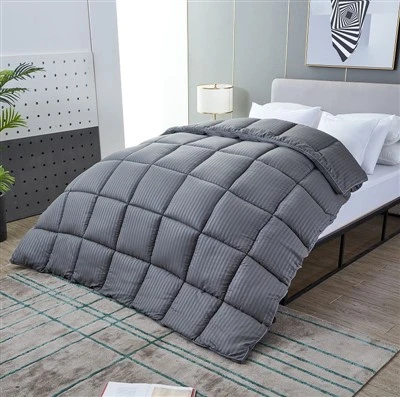
First off, let’s talk basics—you can’t pick the right size if you don’t know your bed’s exact specs. I get it, “twin” or “queen” sounds simple, but a lot of people don’t realize there’s more to it than the name. Let’s start with the mattress itself, because that’s the foundation. Most folks only remember to measure the length and width, but the depth (how thick your mattress is) is the most important part of fitted sheets, period. I’ve had customers who bought sheets labeled “queen size” that were way too short because their mattress was a fancy pillow-top or a heavy memory foam one. So before you do anything, grab a tape measure (a soft fabric one works best, not a rigid ruler that’ll dig into your mattress) and jot down three numbers: width, length, and depth.
Wait, hold up—don’t just measure the top of the mattress. Push down on the top a little, and measure from the very bottom of the mattress to the top edge. Most standard mattresses are 9 to 12 inches deep, but pillow-tops, memory foam, and adjustable bed mattresses can be 14 to 22 inches deep. Some even go up to 24 inches these days, especially with all the thick comfort layers manufacturers are adding. If you skip the depth, your sheet will either pop off the corners when you roll over or the elastic will stretch out in like two weeks. I still remember a customer a few years back who bought sheets without measuring depth and ended up with sheet corners hanging over the mattress side like a sad party hat—she came back the next week so flustered, she said she’d already tried tucking them under the box spring, which just made the whole thing bunch up. Pro tip: if your mattress is on the thicker side, write that number down big—you’ll need it for every sheet you buy from now on.
Next, let’s break down the common sizing terms you’ll see, because they’re not as universal as you might think. A lot of people assume “twin” is the same everywhere, but it’s actually shifted a bit over the years. Standard twin size is 38 inches wide by 75 inches long, right? But there’s twin XL, which is super common in college dorms and some studio apartments—twin XL is 38 inches wide, 80 inches long, so it’s 5 inches longer than a standard twin. If you’re buying for a dorm, always check if it’s twin XL, because regular twin sheets will hang way short at the foot of the bed. I’ve had so many parents order twin sheets for their kid’s dorm bed only to get a message saying they’re too short—now I always make a point to ask customers if it’s a standard twin or twin XL, no exceptions.
Then there’s full size, sometimes called double. Standard full is 54 inches wide by 75 inches long. That’s a popular size for guest rooms or smaller bedrooms. Next up is queen, which is 60 inches wide by 80 inches long. Queen is the most common size for master bedrooms in the US, I’d say. Then king size, which is split into two types: standard king (sometimes called Eastern king) is 76 inches wide by 80 inches, and California king (Western king) is 72 inches wide by 84 inches. Super important to not mix those two up—California king is longer and narrower than standard king, so sheets for one won’t work on the other. I’ve had a customer swap a California king mattress into their room and buy standard king sheets on accident, and they were way too short—they had to order a new set in like 10 minutes.
Wait, and don’t forget about mattresses that aren’t standard. If you have an adjustable bed, a split king, a RV bed, or a daybed, those sizes are totally different. Adjustable beds, for example, often have custom dimensions because they move, so you need sheets specifically labeled for adjustable mattresses—regular fitted sheets won’t stretch or flex enough when the bed bends, and they’ll rip or slip. Split king is two twin XL mattresses put side by side, so you can buy two twin XL fitted sheets, or a special split king set that has a strip of fabric down the middle to cover the gap. RV beds are all over the place—they might be called short queen or short king, so you have to measure that RV bed exactly, because standard sheets won’t fit. Daybeds are another tricky one—they’re basically sofa beds, so the size is usually twin, but they sit on a frame, so you might need a sheet that’s tailored to tuck under the frame too, not just the mattress.
Now, here’s the part most people skip: checking the sheet’s own specs, not just the size label. A lot of brands will label a sheet “queen size” but they don’t list the mattress depth it’s designed for. That’s a red flag, in my book. Good quality fitted sheets will always list the minimum and maximum mattress depth they fit, right on the tag or the product page. For example, a good queen fitted sheet might say “fits mattresses 10-16 inches deep” — that’s way better than just “queen size.” If you have a 15-inch deep mattress, you don’t want a sheet that only fits up to 12 inches, it’ll be too tight and the elastic will tear. If you have a 10-inch standard mattress, a sheet that fits up to 18 inches will be too loose and slip off.
Also, pay attention to the material, because that affects how much the sheet stretches. Cotton sheets, especially percale or sateen, have very little stretch, so you need to get the exact size for your mattress. Jersey cotton sheets are a little stretchier, so they can handle a 1 or 2 inch depth difference, but not more than that. Microfiber is stretchy too, so it’s more forgiving, but don’t push it—still measure your mattress. If you’re buying a linen sheet, forget about stretch—linen is pretty rigid until it’s broken in, so you need to get the exact depth right, otherwise it’ll feel too tight or too baggy.
Another common mistake: forgetting that fitted sheets shrink. Wait, not all sheets shrink, but most natural fiber ones like cotton will shrink about 3-5% after the first wash. So if you have a 12-inch deep mattress, don’t buy a sheet designed for 12 inches that’s already been pre-shrunk? No, wait—actually, you should buy a sheet designed for a depth that’s a little bigger than your mattress if it’s 100% cotton. Because after washing, it will shrink a bit. For example, if your mattress is 12 inches deep, a sheet that fits 12-15 inches will work, because it’ll shrink down to fit the 12 inch mattress. If you buy a sheet that only fits 10-12 inches, after washing it’ll be too tight, and you’ll have to stretch it onto the mattress and worry about elastic popping. Synthetic sheets like microfiber usually don’t shrink, so you can just match exactly.
Wait, let’s talk about corner straps too—super important for people who move around a lot in their sleep. Fitted sheets without corner straps (or corner tabs, whatever you want to call them) will slip off, no matter how good the size is. I recommend looking for sheets that have elastic all the way around the perimeter, not just the four corners. Sheets with only corner elastic will dig into the corners of your mattress and pull loose after a month or two. Full elastic around the edges keeps the sheet tight all the way, so it doesn’t slip even if you’re a restless sleeper. And if you have a thick mattress, look for sheets with deep pockets—those are the ones that are cut extra tall around the sides, so they can wrap around a 20-inch mattress without pulling. A lot of brands say “deep pocket” but don’t specify, so always check the depth measurement on the product.
Let’s run through a quick example to make this real. Say you have a standard queen size mattress, 60 inches wide, 80 inches long, 12 inches deep. You go to buy fitted sheets. First, check the label: “fits queen mattresses 10-16 inches deep.” Perfect, that covers your 12 inch depth. If you had a 16 inch pillow-top queen, you’d want a sheet that fits up to 18 inches, right? Because that extra space will let it wrap around without being too tight. If you had a California king mattress, 72 inches wide, 84 inches long, you’d look for sheets labeled California king, not standard king—those are only 76 inches wide, so they’d be 4 inches too narrow for a California king.
Another example: dorm bed, twin XL, 38 inches wide, 80 inches long, 10 inches deep. You’d need twin XL fitted sheets, not regular twin. A lot of dorm beds have extra thick mattresses too, so check the depth—if it’s a 12 inch dorm mattress, get sheets that fit 10-15 inches deep. I’ve had college students come back saying their sheets are too short at the foot of the bed, and 9 times out of 10 they just ordered regular twin instead of twin XL. It’s such an easy mix-up, but easy to avoid once you know to check.
What about if you’re buying for a split king adjustable bed? Split king is two twin XL mattresses side by side, usually 38×80 each, so total 76×80, same as standard king. But since it splits, you can either buy two separate twin XL fitted sheets, which is great because each side fits your exact mattress, or a split king sheet set that has a gap between the two tops, which works if you want a single sheet that covers the whole bed. Just make sure the depth fits each twin XL mattress, not the whole combined size. Adjustable beds work the same way—most adjustable bases are twin XL, full, queen, etc., so you need to make sure your sheet is labeled for adjustable mattresses, because regular sheets won’t flex when the bed moves up or down.
Now, let’s bust a myth: “I can just buy a larger size and tuck it.” Don’t do that. If your sheet is too big, it’ll bunch up in the middle of the bed, and you’ll end up with a lump under your fitted sheet that makes it uncomfortable to sleep on. Tucking extra fabric is a recipe for wrinkles and bunching, and it can even make the sheet wear out faster because you’re pulling and stretching the elastic. Same with buying a smaller size—it’s too tight, you have to fight to get it on, and the elastic will stretch out or pop after a few washes. Fit is all about matching the size and depth exactly, as closely as possible.
If you’re still unsure, here’s my go-to trick for customers: measure your mattress once, write the numbers down (width, length, depth) and keep them somewhere safe in your phone or a notebook. Then when you’re shopping for sheets, just pull out those numbers. If a product’s page says it fits mattresses 10-14 inches deep, and your mattress is 12 inches, that’s a match. If it says “queen size” with no depth info, skip it—there’s a 50% chance it won’t fit your mattress. Good brands will always list depth specs, and that’s the sign of a company that cares about fit, not just slapping a size label on a sheet.
At the end of the day, getting the right fitted sheet size isn’t rocket science—it’s just about taking 5 minutes to measure your mattress, and paying attention to the specs, not just the name (twin, queen, etc.). If you skip that step, you’re setting yourself up for a week of fighting with sheets that slip, bunch, or are too tight.
Now, if you’re ready to shop for fitted sheets that fit perfectly, just reach out to my team to get matched with the right size for your mattress. We can help you figure out the depth, recommend the best material for your sleep style, and make sure you get a set that’ll last for years, no more night-time sheet drama.
Mattress Topper Pad References:
- The Sleep Foundation. Mattress Size Guide: Dimensions, Types, and How to Measure. 2024.
- International Sleep Products Association. Bedding Sizing Standards and Best Practices. 2023.
- Textile Institute. Fabric Stretch and Fit Properties for Fitted Bed Sheets. 2022.
Hangzhou Ruiyi Home Products Co., Ltd.
With abundant experience, we are one of the most professional fitted sheet manufacturers and suppliers in China. We warmly welcome you to wholesale customized fitted sheet at competitive price from our factory. If you have any enquiry about cooperation, please feel free to email us.
Address: BUILDING 1, NO.1757 CHENHUI ROAD, XINTANG STREET ,XIAOSHAN,HANGZHOU, ZHEJIANG,P.R. CHINA
E-mail: vivian-xu@vip.163.com
WebSite: https://www.ryhometextile.com/
