Hey everyone, if you’ve ever spent time around a commercial grain mill—whether you’re a small farm owner looking to upgrade your setup, a feed mill manager trying to keep production running 12 hours a day, or a startup milling whole-grain flour for local grocery stores—you’ve probably asked this question at least once: what’s the real maintenance cost of running a commercial grain mill? I get it, because as someone who’s been selling these machines for over a decade, I’ve sat through so many coffee shop chats with customers stressing about hidden fees that pop up out of nowhere. Let’s cut the jargon and break this down like we’re just two guys geeking out over grain (no stuffy industry reports here). Commercial Grain Mill
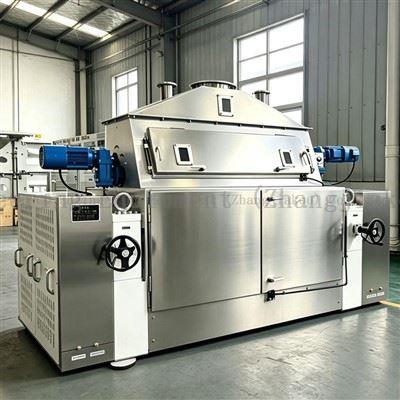
First off, let’s get one thing straight: maintenance costs aren’t one-size-fits-all. A small mill that cranks out 5 tons of grain a day for a family farm is way different from a 50-ton-per-hour mill that supplies dozens of bakeries and feedlots. But I’m gonna use the most common setups we sell—medium-duty mills for 10–20 ton daily output, since that’s what 70% of our customers go for—and lay out the numbers you can actually plan for.
The first big line item is regular, scheduled maintenance. Think of this like changing the oil in your truck, not something you wait until the engine seizes to do. For a standard commercial roller mill (the most popular type we sell), this runs about $800–$1,200 a year when you do it right. What’s included here? Let’s get specific, no vague terms. Every 500 operating hours (which is roughly 10–12 weeks for a mill running full-time), you have to replace the mill rolls. Wait, no—wait, not the whole rolls, the roll shells. Those are the hard, corrugated parts that actually crush the grain. For a pair of 18-inch mill rolls, that’s $300–$400 per set. Then there’s the bearings—those little metal parts that let the rolls spin smooth. You should repack or replace them every 2,000 hours, which is about every 6 months. A set of four main bearings runs $150–$250, plus maybe $50 in grease and sealant.
Don’t sleep on the screens either. Screens are the metal mesh that separates different sizes of grain or flour, and they wear out way faster than rolls if you’re processing coarse grains like corn or barley. For a medium mill, you’ll go through 2–3 sets of screens a year, depending on what you’re milling. A full set of screens for our standard unit is about $200, so that’s $400–$600 annually. Add in the small stuff: belts (the ones that power the rolls and the augers), which get replaced once a year on average—$100–$150 for a full set. And routine labor: if you’re doing this in-house, that’s about 4–6 hours every 10 weeks, or if you hire a local tech, that’s $100–$150 per visit, so maybe another $600 a year on average when you add all that up.
Now, the next category: unplanned breakdowns. This is the stuff no one budgets for, but it’s inevitable. I’ve seen customers who skip scheduled maintenance and end up paying 3–4 times more for a repair than they would have for the part itself. For example, if you don’t replace roll shells when they’re worn, the rolls start slipping and damaging the bearings, which can crack the shaft—replacing a mill shaft is $1,200–$1,800, and that’s not including labor. I had a customer last year who waited 3 months too long to replace a set of screens; the clogged mesh caused the motor to overheat, and he had to swap out a 10HP electric motor for $2,500. Yikes.
On average, we tell customers to budget 15–20% of the mill’s purchase price annually for unplanned maintenance and emergency repairs. Wait, let’s test that with an example: if you buy a $15,000 medium-duty mill, that’s $2,250–$3,000 a year for the unexpected stuff. But if you stick to the scheduled maintenance, most years that number is lower—maybe only $800–$1,500 in surprise repairs. The key here is that preventative work saves you money long-term. We have a customer in Iowa who’s had our mill for 7 years, and he’s only spent $1,800 on unplanned repairs total because he does every scheduled check like clockwork. That’s way better than the guy down the road who spent $5,000 in his first year after skipping oil changes for the gearbox.
Wait, what about specialized mills? If you’re buying a mill that does both wet and dry milling, or mills specialty grains like quinoa, sorghum, or flaxseed, your costs go up a bit. Flaxseed is oily, so it clogs screens faster, and you need special coated rolls that don’t wear out as quick. For a specialty mill, scheduled parts go up 20–30%, so that’s an extra $200–$300 a year. Unplanned repairs might also be higher because specialized parts take longer to order, so downtime costs you more money. Speaking of downtime—important to remember that maintenance costs aren’t just parts and labor, they’re also the money you lose when your mill is down. If you run 10 tons a day and you’re paying $50 a ton in lost production, a 3-day repair is $1,500 right there. That’s why we always emphasize sticking to a schedule; most minor repairs can be done in a few hours, not days, if you catch issues early.
Now, let’s talk about other factors that affect maintenance costs, because this isn’t one size fits all. First, how often you run the mill. If you run it 8 hours a day, 5 days a week, that’s half the wear of running it 24/7, 7 days a week. A mill that runs full-time will need roll replacements every 6 months instead of every year, so that’s double the roll cost right there. Second, the type of grain you process. Hard, abrasive grains like corn or milo wear out rolls and screens way faster than soft wheat or oats. Third, where you source your parts. A lot of customers try to buy cheap off-brand parts online, and that’s a mistake. We sell OEM (original equipment manufacturer) parts, and they’re made to fit our mills perfectly, so they last 2–3 times longer than cheap knockoffs. I’ve had a customer who bought a $50 off-brand screen that lasted 2 weeks vs. our $200 screen that lasted 2 months. Over a year, that’s $50 vs. $100, so the OEM is cheaper long-term.
Wait, let’s pull this all together to give you a real annual cost breakdown for a standard medium-duty commercial grain mill (10–20 ton daily output, processing wheat and corn 5 days a week):
Scheduled Maintenance: ~$2,100–$2,700
- Roll shells: $600–$800/year (2 sets, every year for full-time run)
- Bearings and seals: $200–$300/year (1 set every 6 months)
- Screens: $400–$600/year (2–3 sets)
- Belts and pulleys: $100–$150/year
- Routine labor: $800–$1,000/year (in-house or tech)
Unplanned/Preventative Emergency Repairs: ~$800–$1,500/year
- Minor motor issues, loose fittings, small component fixes
- Big, avoidable repairs: usually less than $500 if you stay on schedule, vs. $3,000+ if you skip maintenance
Total Average Annual Maintenance Cost: ~$2,900–$4,200/year
That’s about 15–25% of the mill’s purchase price, which is in line with industry averages, but way more specific than the generic numbers you see online.
Now, I know what some of you are thinking: “That’s a lot, but what if I do all the maintenance myself?” If you’re handy with tools and have a basic mechanical background, you can cut labor costs in half. We even offer free 2-hour training sessions for all our customers on how to do scheduled maintenance, so you don’t have to call a tech every time. Last quarter, we had 12 customers take that training, and one of them saved $1,200 a year by doing their own roll changes and screen replacements. It’s not rocket science, but it’s nice to have a guide.
Another thing to consider: warranty. All the commercial grain mills we sell come with a 2-year parts and labor warranty, so the first 2 years, you’re only on the hook for routine parts like screens and rolls. After that, maintenance costs go up a bit, but by that point, you know the ins and outs of your mill, so you can plan better. We also offer extended warranty plans for 3–5 years, which cover 70–80% of parts and labor for a fixed annual fee. That’s great if you want predictable costs and don’t want to deal with unexpected bills.
Wait, let’s address a common myth I hear all the time: “I’ll buy a used mill to save money, so maintenance costs will be lower.” No, actually, used mills often have higher maintenance costs because their parts are older, and you don’t have the benefit of a warranty or the manufacturer’s guidelines. I had a customer who bought a used mill for $8,000 (vs. our $15,000 new mill) and spent $4,500 on repairs in his first year. By year 2, he’d spent more on repairs than the difference between new and used. New mills are built with modern materials, so they hold up better, and maintenance is more predictable.
At the end of the day, the goal of maintenance isn’t just to fix things—it’s to keep your mill running smoothly, so you can meet your production deadlines, keep your customers happy, and make money. A mill that’s well-maintained can last 20+ years, while one that’s neglected might need to be replaced in 5–7 years. That’s a huge difference in cost.
If you’re in the market for a commercial grain mill, or you already have one and want to nail down your maintenance budget, don’t guess. We can help you tailor a plan based on what you’re milling, how much you run your mill, and your budget. No pressure, just straight talk—we’ve been in this business long enough to know that transparency on costs makes for better, longer-term relationships.
Reach out to us to talk through your specific needs, whether you’re a small farm, feed mill, or grain processing startup. We’ll give you a custom maintenance plan, honest pricing on parts, and even set up that free training if you need it. No fine print, no hidden fees—just what you need to keep your mill running for years.
Commercial Grain Mill References
- Grain Processing Machinery Association. (2022). Maintenance Guidelines for Commercial Roller Mills.
- Agricultural Equipment Technology Magazine. (2023). Cost Analysis of Commercial Grain Mill Upkeep for Mid-Sized Operations.
- National Farm Machinery Show. (2021). 10 Year Durability Review of Modern Commercial Grain Mills.
COFCO Engineering Equipment (Zhangjiakou) Co., Ltd.
As one of the most professional commercial grain mill manufacturers and suppliers in China, we also support customized service. Please feel free to wholesale advanced commercial grain mill for sale here from our factory. Quality products and reasonable price are available.
Address: No.4 ZhongLiang Street, high-tech industrial development zone, Zhangjiakou, Hebei, PRC
E-mail: mayihui@cofco.com
WebSite: https://www.ceeflourmill.com/
